

Stock trading robot
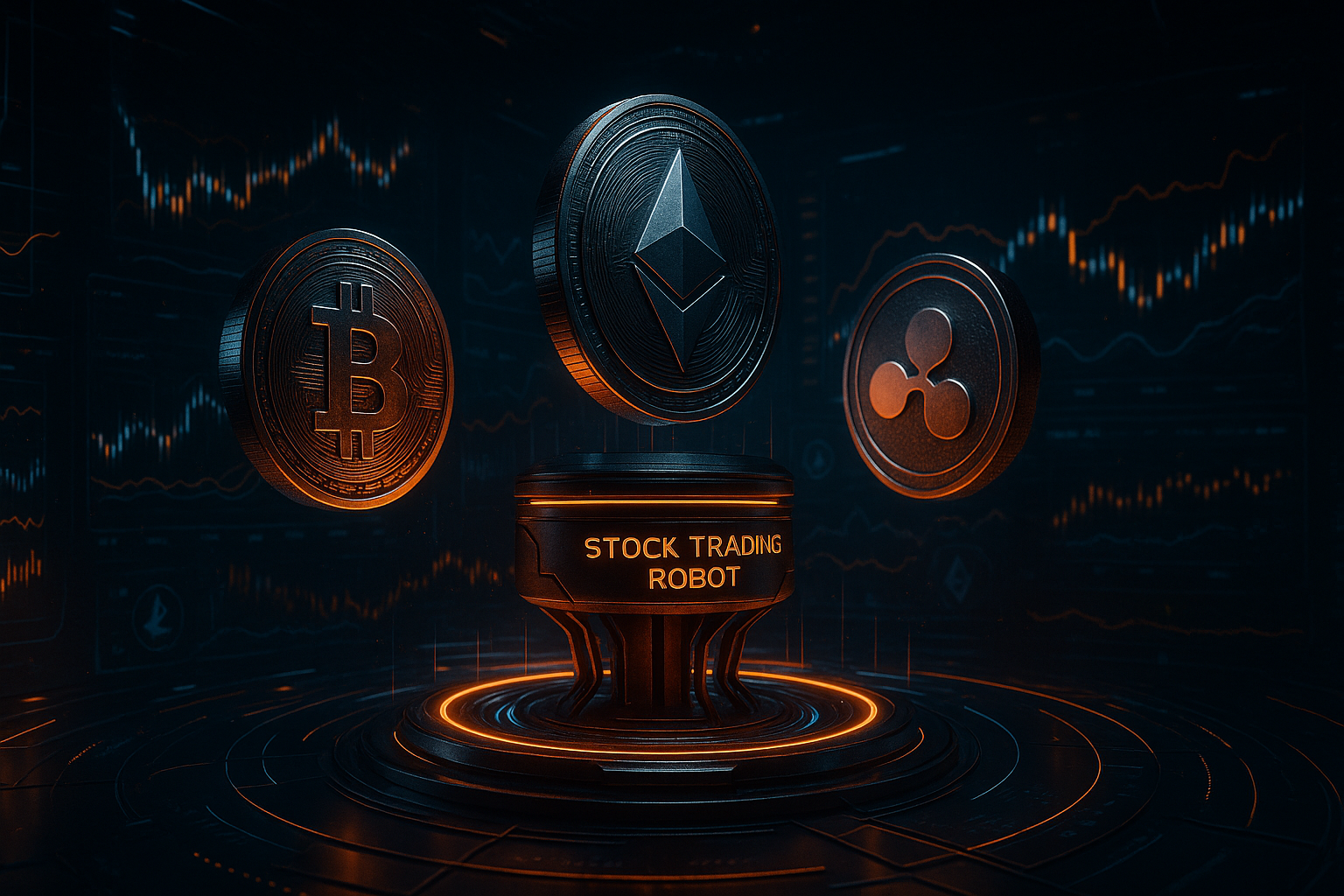
A stock market trading bot is a piece of software that analyses stock quotes, news, economic activity indicators, and other factors affecting the value of securities. It can operate based on predefined algorithms or use machine learning to adapt to changing market conditions.
Historically, stocks have shown higher returns compared to bank deposits and bonds. By selecting promising companies and investing in them, one can achieve substantial profit through the growth of their value and dividends.
Stocks allow the creation of a diversified portfolio, reducing risks. An investor can allocate capital across different economic sectors, which mitigates the impact of price drops on individual assets.
Some companies pay dividends, providing investors with a stable passive income. This is particularly valuable for long-term investors looking to profit regardless of market fluctuations.
Shares of large companies are traded on highly liquid exchanges. This means they can be quickly bought or sold without significant price losses.
In the past, the stock market was only accessible to large investors, but now, thanks to online brokers and mobile apps, anyone can start trading stocks with minimal investments.
Over time, stocks tend to increase in value, helping protect capital from depreciation. Unlike bank deposits, whose returns may not keep up with inflation, the stock market offers an opportunity to outpace price growth.
Some brokers offer margin lending, allowing trading with borrowed funds. This can increase profits but requires caution, as it also raises risks.
Stock markets are regulated by government bodies, and companies are required to disclose their financial statements. This enhances investor trust and enables informed decision-making.
Despite all their advantages, trading bots are not a perfect tool. Their effectiveness largely depends on the correct setup of algorithms and the quality of the input data. In adverse market conditions, a bot may make mistakes if its algorithms aren’t adapted to unconventional situations.
Moreover, high-frequency trading and automated systems can cause sharp market fluctuations, increasing its volatility. Some bots may make unprofitable trades due to software glitches or insufficient strategy testing.
Investing and trading require analytical thinking, discipline, and continuous learning. This helps develop financial literacy and make more informed decisions in both investments and life.
Overall, trading stocks is a solid way to grow capital, but to be successful, it’s important to study the market, manage risks, and act thoughtfully.
Category news: Product and Bot Features Trading Strategies
-

What is an AI crypto trading bot and how does it work?
An AI crypto trading bot combines analytics with automated execution, helping traders identify potential setups faster and, when needed, open or close trades according to predefined logic. On B-World, this works through AI signals and API trading: the platform receives market data and places orders via API keys created by the user on the exchange, […]
-
Manual trading vs automated trading: when is each more effective?
Manual trading tends to work best where context matters most: news flow, shifts in market regime, unusual situations, and the ability to “read” price behaviour. Automated trading, by contrast, excels in discipline and speed – strict rule execution, emotion-free decisions, and 24/7 monitoring. In practice, a hybrid approach often delivers the best results: you make […]
-

Is B-World suitable for beginner traders?
Expert Overview of the Platform’s Capabilities The crypto and forex trading markets are evolving at a rapid pace, yet for newcomers they can still feel overwhelming: analytics, risk management, strategy selection, and technical setup often create a significant barrier to entry. That’s why automation tools and trading-signal services like B-World are increasingly seen as a […]
-

Complete Guide to Automated Trading via API
Automated trading via API is a way to connect a trading platform to a cryptocurrency exchange so that trades are opened and closed automatically according to predefined logic, without manual involvement and without granting access to funds. On B-World, the API is used to retrieve data and place orders, while risk control and strategy management […]
Latest news
-
What is an AI crypto trading bot and how does it work?
An AI crypto trading bot combines analytics with automated execution, helping traders identify potential setups faster and, when needed, open or close trades according to predefined logic. On B-World, this works through AI signals and API trading: the platform receives market data and places orders via API keys created by the user on the exchange, […]
-
Manual trading vs automated trading: when is each more effective?
Manual trading tends to work best where context matters most: news flow, shifts in market regime, unusual situations, and the ability to “read” price behaviour. Automated trading, by contrast, excels in discipline and speed – strict rule execution, emotion-free decisions, and 24/7 monitoring. In practice, a hybrid approach often delivers the best results: you make […]
-
Is B-World suitable for beginner traders?
Expert Overview of the Platform’s Capabilities The crypto and forex trading markets are evolving at a rapid pace, yet for newcomers they can still feel overwhelming: analytics, risk management, strategy selection, and technical setup often create a significant barrier to entry. That’s why automation tools and trading-signal services like B-World are increasingly seen as a […]
-
Complete Guide to Automated Trading via API
Automated trading via API is a way to connect a trading platform to a cryptocurrency exchange so that trades are opened and closed automatically according to predefined logic, without manual involvement and without granting access to funds. On B-World, the API is used to retrieve data and place orders, while risk control and strategy management […]