

CRV
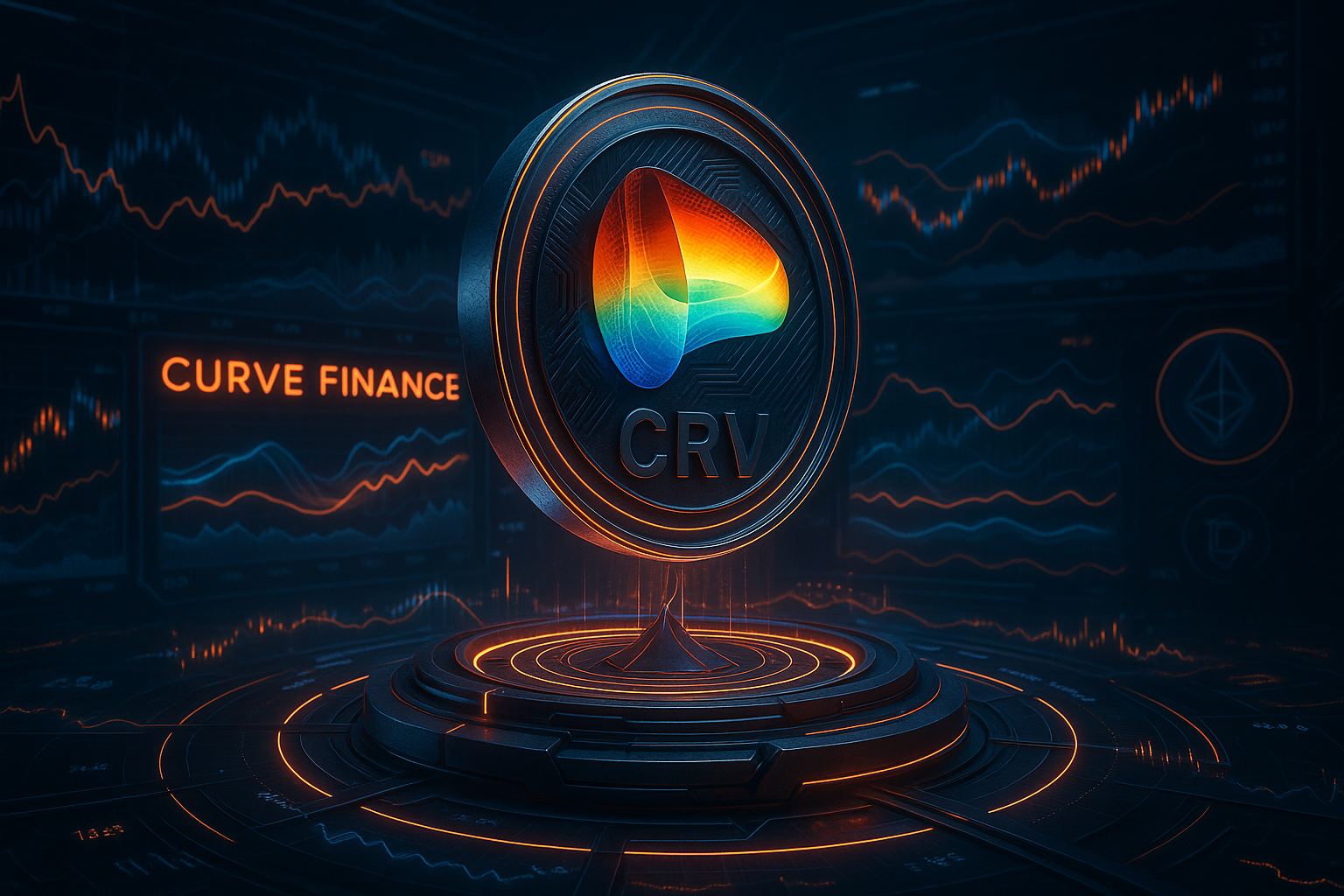
CRV is the native token of the Curve Finance ecosystem – one of the largest and most widely adopted decentralised protocols in the DeFi space. Curve was designed to facilitate the exchange of stablecoins with minimal slippage and low fees. Its core idea is to enable highly efficient swaps between assets of similar value, such as USDT, USDC, DAI, and various tokens pegged to the same underlying asset. Within this ecosystem, CRV plays a pivotal role: it is used for governance, staking, and liquidity incentives.
How CRV Works
CRV serves as a governance token, allowing holders to vote on protocol upgrades, reward allocations, and liquidity pool parameters. Tokens can be locked within a dedicated smart contract to create veCRV (vote-escrowed CRV). The longer the lock-up period, the greater the voting power and potential rewards. This mechanism encourages long-term participation and strengthens the protocol’s overall stability.
Key Advantages of CRV
Protocol governance. CRV holders directly influence the project’s development, making the community the driving force behind Curve’s evolution.
Liquidity incentives. Curve is well known for its “Curve Wars” – projects competing for veCRV holders’ votes to enhance their pool rewards. This ongoing rivalry sustains strong demand for CRV.
Low fees and stability. Curve’s unique AMM (automated market maker) design ensures minimal slippage and seamless swaps between stable assets.
Proven reliability. As one of the longest-standing and most battle-tested DeFi protocols, Curve has successfully weathered multiple market cycles.
CRV’s Role in the Future of DeFi
The DeFi sector continues to evolve, with stable assets attracting growing interest. Curve has firmly established itself in this niche, and CRV remains one of the key tokens for liquidity providers. Over time, the ecosystem is expected to expand to include new asset types, liquidity pools, and integrations with other protocols. Meanwhile, increasing competition among platforms for veCRV votes will continue to drive demand for the token.
It’s also worth noting that the veCRV lock-up model promotes a genuinely long-term approach. Rather than simply acquiring CRV and selling it on the open market, users must choose between holding and participating in governance or using it purely as an investment. This structure helps reduce speculative pressure and makes the ecosystem more resilient compared with projects whose tokens circulate freely without incentives to hold.
CRV’s appeal is further enhanced by yield farming opportunities. Liquidity providers earn CRV rewards, which can be reinvested to compound their returns – creating a self-sustaining loop of token usage and demand. This dynamic has sparked fierce competition among major DeFi players such as Yearn Finance and Convex, both vying for influence within the Curve ecosystem – a rivalry widely referred to as the “CRV Wars.”
Cross-Chain Expansion
Another promising area of growth is cross-chain development. As more blockchains emerge and the demand for efficient inter-chain swaps grows, Curve’s influence could easily extend beyond Ethereum. Versions of the protocol already operate on several other networks, and this trend is expected to accelerate. The broader the range of supported blockchains and assets, the larger the potential user base – and, by extension, the greater the value proposition of the CRV token.
A Long-Term Governance Asset
Ultimately, CRV is far more than a simple digital asset – it’s a governance instrument underpinning one of DeFi’s most established and resilient ecosystems. Its model is built on long-term participant incentives, robust technical infrastructure, and tangible utility for holders of stable assets.
If the DeFi market continues to mature, CRV is well placed to cement its position as one of the cornerstone tokens for liquidity management and decentralised governance.
The token’s long-term outlook will depend largely on the overall state of the crypto market and the ongoing development of decentralised finance. Even so, the principles that define Curve – stability, efficiency, and predictability – remain as relevant as ever. As decentralised exchanges continue to attract greater liquidity, CRV’s role as both a governance and incentive mechanism is set to grow even further.
Category news: Assets (BTC / ETH / Altcoins / Commodities / Indices)
-

DOT
DOT is the native token of the Polkadot ecosystem – a next-generation blockchain designed to unite multiple independent networks into a single decentralised infrastructure. Unlike traditional cryptocurrencies, which operate within a single blockchain, Polkadot enables different networks to interact with one another, exchange data and resources, without sacrificing security or speed. DOT plays a central […]
-

DOGE
Dogecoin, or simply DOGE, is one of the most recognizable cryptocurrencies born out of internet culture. It was originally created as a joke – a parody of the hype surrounding Bitcoin at the time. Yet over the years, the coin evolved into a full-fledged digital asset supported by a large and highly engaged community. Its […]
-
COMP
COMP is the native token of the Compound protocol – one of the core services in the DeFi ecosystem operating on the Ethereum blockchain. Its primary purpose is protocol governance. COMP holders gain the right to participate in votes, submit proposals, modify system parameters, and influence the strategic direction of the project. In this sense, […]
-

ADA
ADA is the native token of the Cardano blockchain, a network designed as a research-driven platform for developing decentralized applications and smart contracts. The project stands out from others by relying on rigorous academic studies, formal verification methods, and a multi-layered architecture. The ADA token not only acts as a medium of exchange but also […]
Latest news
-
What is an AI crypto trading bot and how does it work?
An AI crypto trading bot combines analytics with automated execution, helping traders identify potential setups faster and, when needed, open or close trades according to predefined logic. On B-World, this works through AI signals and API trading: the platform receives market data and places orders via API keys created by the user on the exchange, […]
-
Manual trading vs automated trading: when is each more effective?
Manual trading tends to work best where context matters most: news flow, shifts in market regime, unusual situations, and the ability to “read” price behaviour. Automated trading, by contrast, excels in discipline and speed – strict rule execution, emotion-free decisions, and 24/7 monitoring. In practice, a hybrid approach often delivers the best results: you make […]
-

Is B-World suitable for beginner traders?
Expert Overview of the Platform’s Capabilities The crypto and forex trading markets are evolving at a rapid pace, yet for newcomers they can still feel overwhelming: analytics, risk management, strategy selection, and technical setup often create a significant barrier to entry. That’s why automation tools and trading-signal services like B-World are increasingly seen as a […]
-

Complete Guide to Automated Trading via API
Automated trading via API is a way to connect a trading platform to a cryptocurrency exchange so that trades are opened and closed automatically according to predefined logic, without manual involvement and without granting access to funds. On B-World, the API is used to retrieve data and place orders, while risk control and strategy management […]