

Choosing a Profitable Spot Trading Bot
Choosing a profitable spot trading bot requires matching your risk tolerance and trading style to the bot’s underlying strategy, with heavy emphasis on low commission structures and robust risk controls. These bots trade using actual crypto assets, not derivatives. In regions like the European Union or Kazakhstan, prioritize platforms where you control your API keys for reliable automation.
Developing automated cryptocurrency trading systems involves understanding underlying mechanics, assessing potential pitfalls, and establishing clear risk parameters before deployment. Many traders approach bots expecting guaranteed returns, which isn’t accurate. Professional guidance suggests focusing on systems that execute established strategies, like mean reversion or systematic scalping, using rigorous testing on small positions first. This guide details how to select reliable technology and manage expectations when pursuing automated gains in volatile markets across Canada, Dubai, and Ukraine.
- Spot bots trade actual cryptocurrency assets, unlike futures bots which trade contracts.
- Realistic returns stem from disciplined risk management (e.g., 2-5% monthly targets) rather than fixed profit guarantees.
- Prioritize bots that offer clear risk controls, such as dynamic stop-loss and position sizing.
- Always start testing any automated bot strategy with minimal, disposable capital by using a demo account first.
What is the difference between spot trading bots and futures bots?
Spot bots use actual crypto assets. Futures bots trade contracts betting on future prices. Since you’re dealing with current holdings, spot bots are simpler and carry less complexity risk. A spot bot might automatically buy Ethereum when its price dips below a key support level you define.
Understanding this fundamental difference directs your entire approach to automated trading. When you use a spot bot, say on Binance, you are swapping one asset for another directly from your wallet balance. There’s no leverage used on the underlying asset itself, minimizing counterparty risk associated with derivatives. This direct asset exchange makes the risk profile generally more manageable for those newer to automation in markets like Israel or the UAE.
Futures bots, on the other hand, operate on derivatives. They don’t involve physically exchanging the crypto; instead, they trade agreements regarding the price of the crypto at a later date. This introduces leverage, which amplifies potential gains but equally amplifies potential losses quickly. If you’re focused on generating consistent, measurable returns without the added complexity of collateral requirements and liquidation risks inherent to futures, sticking to well-vetted spot automation is a sensible path.
When evaluating bot functionality, always confirm how the platform manages order execution across different centralized exchanges (CEXs) like Binance. Reputable setups connected via API keys place direct limit orders for spot assets. This ensures trades execute precisely when conditions are met.
What features define a profitable spot trading bot?
Picking a profitable spot trading bot means aligning your risk tolerance and style with its strategy. Prioritize low commissions and strong risk controls. Since bots use your actual crypto assets, they differ from derivatives. For regions like the European Union or Kazakhstan needing reliability, controlling your API keys is key.
The “best” bot isn’t defined by how advanced its algorithm sounds. It is defined by logic you trust and risk parameters you can audit. Investigate the strategies the bot supports. Are they simple grids buying and selling at set intervals? Or complex mean reversion models predicting price wobbles around a moving average? The answer depends on the current market regime.
Check fee structures carefully. Low commissions matter because high costs eat profits fast, especially for scalping bots. Security is critical too. Your platform must let you keep your API keys and operational funds; never hand custody to the service provider. This rule applies whether you’re in Canada or Dubai.
Look at how customizable it is. You can cap drawdowns for the whole session or limit trades to liquid pairs like BTC/USD or ETH/USD. That level of control keeps automation useful and stops unexpected losses. A bot that also provides educational resources shows it cares about user competence.
What are the key risk management features I need in a spot trading bot?
Effective risk management is paramount; prioritize bots that feature dynamic stop-loss, take-profit levels, and position sizing controls. Never use a bot that requires constant manual overrides.
This section tackles the most critical aspect of automated crypto trading. A bot is only as good as the guardrails you put around it. Think of the strategy as the engine and risk controls as the safety gear. You need automatic triggers for when market conditions stray from expectations. If a regulatory announcement in the EU or a geopolitical event affects Kazakh markets, the bot must know when to pause or exit.
Three features stand out above the rest for robust portfolio protection:
- Hard stop-loss implementation: This sets an absolute maximum loss limit for the bot’s activity on a pair or daily basis.
- Take-profit levels: These lock in gains before volatility reverses.
- Automated portfolio diversification: The bot should ideally spread trades across multiple, uncorrelated crypto pairs rather than committing all capital to a single pair.
Build or configure your bot yourself, but check the documentation first. The Binance API docs Binance API docs explain the technical limitations and rate limits you face when designing safeguards. These constraints dictate your risk settings. Avoid any bot that locks these parameters, especially if market conditions in your region change.
What are realistic crypto bot profits and return expectations?
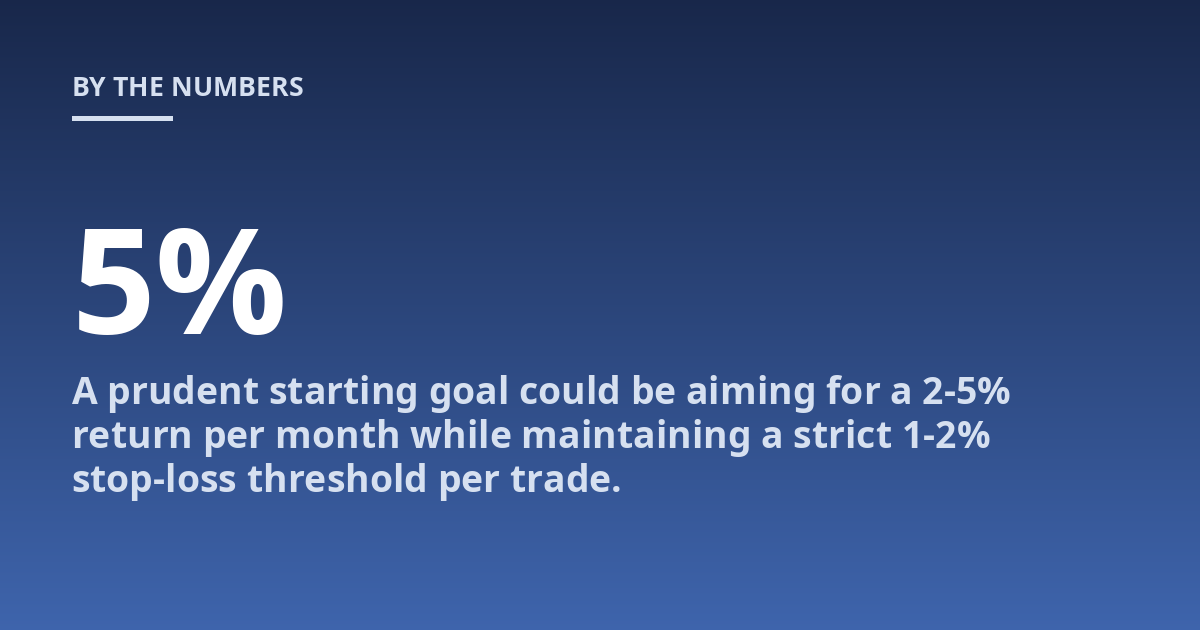
Realistic returns come from consistent, disciplined risk management, not guaranteed gains. Aim for a positive risk-adjusted return instead of chasing fixed percentages. Start with a target of 2-5% monthly, using a strict 1-2% stop-loss per trade. Bot performance degrades significantly during high volatility periods.
Most people underestimate volatility. They see past bull-cycle profits and assume those gains are permanent. That’s a trap. Profits track risk and market cycles. Strategies that thrive in sideways consolidation often fail during sharp breakouts.
Stop trying to maximize returns. Focus on the Sharpe ratio instead, which balances gain against risk. Spot bots cap your upside because they don’t use leverage. They also cap your downside by keeping you within actual asset holdings. Don’t chase big wins with automated strategies. Track steady, compounding growth over many cycles as your real metric.
How do geographic and regulatory factors affect bot performance?
Optimizing for local market conditions means tracking regulatory frameworks and liquidity hubs. A strategy that works in Singapore often fails in Kyiv or Toronto due to different operational hours, fiat on-ramps, or compliance requirements seen in the European Union.
For users in the UAE or Dubai, local regulations like those overseen by Dubai VARA Dubai VARA create a distinct operational backdrop. Traders in Canada must navigate provincial securities laws, while those in Ukraine or Kazakhstan deal with specific local banking and exchange interfacing rules. A global bot platform must be highly adaptable to these disparate requirements.
The connectivity aspect becomes critical here. Using a bot that integrates directly via API keys to major, recognized exchanges (like Binance) simplifies this, as the exchange handles the direct connection to the global liquidity pool. Always confirm that the bot platform can handle necessary local considerations, like specific withdrawal methods or regional time zone delays impacting trade execution.
| Region Focus | Primary Operational Consideration | Trade Impact Example |
|---|---|---|
| European Union | Adherence to standards like MiCA | Regulation affects asset classification and exchange operation standards. |
| Dubai/UAE | Local financial authority oversight | Compliance dictates acceptable counterparty risk levels for automated services. |
| Canada/Kazakhstan | Local payment rails and currency coupling | Liquidity depth for CAD or KZT pairs can impact slippage. |
A well-designed bot platform addresses this by providing deep API integration, allowing the bot to interact with the exchange mechanics directly, bypassing some localized retail friction points.
What mistakes should you avoid with crypto trading bots?
Most people trip over overconfidence,, ignore risk parameters, and treat the bot as a crutch rather than a systematic tool. See it as an advanced calculator executing rules, not an oracle predicting market moves.
New traders often blow through their learning curve by dumping too much capital into a bot right away. Instead, deploy funds in phases. Start on paper, then shift to a micro-capital live test using a low-volatility pair. Figure out the exact point where you feel comfortable reviewing your bot’s moves manually, that line is your initial risk ceiling.
Another critical error is failing to understand the trade-off between low fees and strategy complexity. High fees eat into profits. A bot optimized only for minimal fees might use aggressive, short-term scalping tactics that can lead to excessive commission erosion during minor pullbacks. You need a balance. For instance, a bot that employs medium-term swing trading might tolerate slightly higher fees if its holding period allows it to accumulate meaningful profit despite minor transaction costs.
Lastly, never stop researching underlying market mechanics. The market doesn’t care how sophisticated your bot is. Watch global events that drive crypto adoption. Pay attention to digital finance regulation across the region. Knowing when an external shock invalidates your bot’s core assumptions is expertise no algorithm can teach you.
FAQ
How do I choose the best AI-assisted trading software for Binance, OKX, Bitget and BingX?
Find a trading platform with robust, low-fee connectivity for Binance, OKX, Bitget and BingX. You must control API keys. Check if the system supports semi-automatic or automated modes with risk controls including stop-loss and position size, plus strategies like trend-following or scalping filtered by volume.
What is a profitable crypto trading bot for Binance, OKX, Bitget and BingX?
A profitable crypto trading tool is AI-assisted software that executes trades based on market scans through official APIs. It connects to exchanges like Binance via API, with funds remaining in the user’s own account. The tool applies strategies such as scalping or trend-following to capitalize on market movements, filtered by volume and volatility. But its success hinges entirely on disciplined risk management and the use of built-in controls like stop-loss, take-profit, trailing stop, and daily loss limits to adapt to current conditions.
What mistakes should you avoid with profitable crypto trading bots?
No trading software guarantees profit. Never risk capital you cannot afford to lose, especially while learning its limits. Testing strategies on historical data across multiple distinct market cycles provides valuable insights; pre-trade risk validation is often overlooked. A system that forces manual intervention during active trading hours defeats the purpose of automation.
How do profitable crypto trading bots work?
These bots monitor crypto pairs against your technical indicators or mathematical models. When price action hits a pre-set condition, like a 50-period moving average crossing the 200-period, the bot executes a market or limit order via the exchange API. Its intelligence lies in the ruleset, not prediction, since it only executes the logic you program.
How do I start using a spot trading bot for crypto trading?
Start by picking a bot that supports spot trading and offers a free trial period so you can test the interface and basic functionality without commitment. Study the bot’s core strategy and set strict risk parameters next. Run the bot in paper trading mode using historical data for several weeks to simulate various market cycles before committing any live capital.
Final steps to implementing your spot trading bot
Implementing a profitable spot trading bot requires systematic technical checks and risk confirmations. Review your platform capabilities first. Secure your API keys next, granting only the read/write permissions necessary for trading. Define an initial, conservative parameter set. This builds trust with your automation system.
Don’t tie up your main capital right away. Start with a small test amount, just enough to cover transaction fees for a few weeks. This lets you watch execution speed, latency, and how the bot handles minor network hiccups that simulation misses. That check matters, especially with regulations ranging from Quebec to Abu Dhabi.
Platform choice matters. Strategy adherence matters just as much. Pause if you want to tweak the logic after one bad trade. That’s emotional trading, not automation. Follow the plan instead. Resources on the best crypto trading bot for Binance in 2026 can show you current features and fee structures when you’re ready to configure your setup.
Test the platform’s risk management controls against simulated volatility profiles for your chosen assets. This practical step affirms your readiness to deploy automated systems responsibly.
Latest news
-

Cryptobot subscription in 2026: cost, activation and free trial
A cryptobot subscription in 2026 costs $99 per month on B-world, an automated cryptocurrency trading platform operated by Denha Nexus s.r.o. The service includes a 14-day free t…
-

ETH Trading Bot Pricing: Plan Comparison for Traders
ETH trading bot pricing typically ranges from free tiers with limited features to $99 per month for full access. Most platforms charge a flat monthly subscription rather than ta…
-

Free trading bot vs paid subscription: what the paid tier adds
The difference between a free trading bot and a paid subscription centers on capability, depth of market analysis, and customization of risk management tools. While free bots of…
-

Buy a Binance trading bot: pricing, activation and API setup
A Binance trading bot automates cryptocurrency trades by connecting to your exchange account through API keys. B-world offers AI-driven scalping and swing bots for $99 per month…