

XLM
XLM – what is it?
XLM (Stellar Lumens) moves value globally at speed and low cost. It powers the Stellar blockchain, which bridges financial systems for international payments.
Jed McCaleb launched the project in 2014 after founding Ripple. Stellar’s goal differs: it brings banking services to people worldwide, especially where infrastructure is thin.
What backs XLM
XLM lacks physical backing like gold or state reserves. Its value comes from utility within the Stellar network. Tokens power the blockchain in three ways:
– Transaction fees: You pay a fraction of a cent in XLM to move funds on Stellar.
– Network integrity: These fees stop spam and keep the consensus mechanism efficient.
– Asset exchange: Stellar lets you issue digital versions of currencies like USD or EUR, using XLM as an intermediary to swap them instantly.
XLM’s worth relies on demand for these operations and the network’s expanding partnerships.
Key advantages of Stellar
-
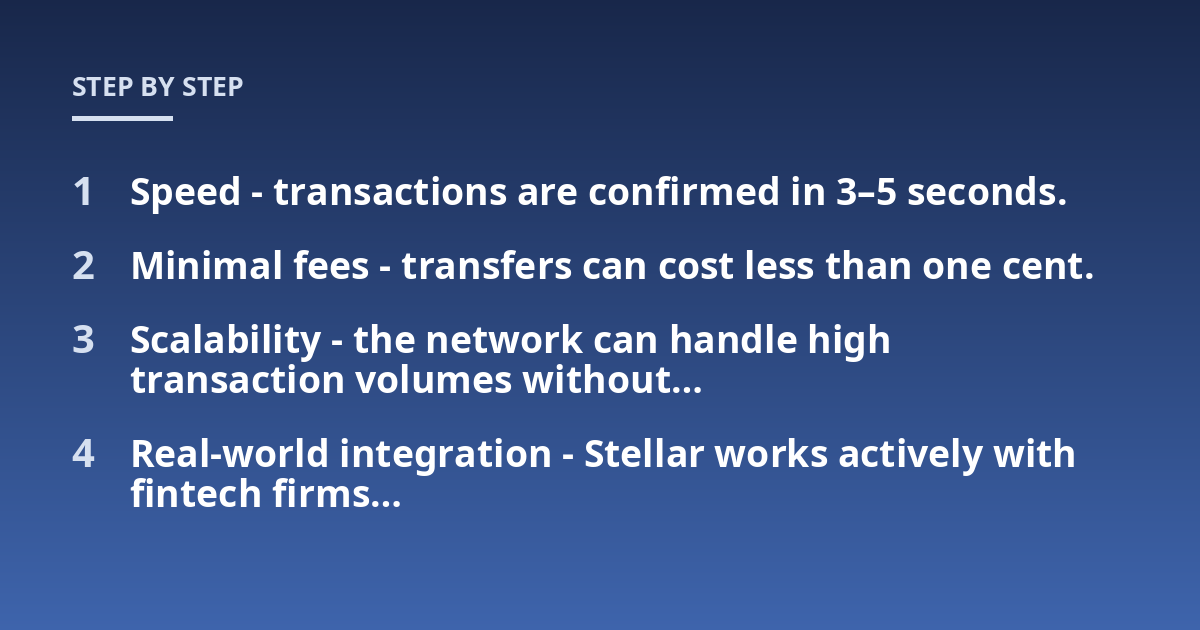
Speed – transactions are confirmed in 3-5 seconds.
-
Minimal fees – transfers can cost less than one cent.
-
Scalability – the network can handle high transaction volumes without congestion.
-
Real-world integration – Stellar works actively with fintech firms, banks and organisations dealing with digital assets.
Used widely for cross-border payments, micro-transactions, currency exchanges and issuing tokenised assets, it’s especially attractive in regions where banking services are limited or international transfers are prohibitively expensive.
The outlook for XLM
XLM’s future hinges on Stellar’s adoption in global finance. More banks using the network for payments means higher token demand. Stellar already works with MoneyGram and explores central bank digital currency (CBDC) initiatives.
As businesses prioritize fast, cheap settlements, Stellar could cement itself in financial infrastructure. Steady development gives XLM a real shot at becoming a primary tool for global transfers and digital assets.
XLM is more than just a cryptocurrency. It anchors a flexible ecosystem for moving value worldwide. The token’s growth ties directly to Stellar’s expansion. That makes XLM an asset worth watching long-term.
Category news: Assets (BTC / ETH / Altcoins / Commodities / Indices)
-
DOT
DOT is the native token of the Polkadot ecosystem. This next-generation blockchain unites multiple independent networks into a single decentralised infrastructure. Traditional cryptocurrencies operate within a single chain. Polkadot lets those different networks interact, exchange data and resources, without sacrificing security or speed. DOT underpins the operation and long-term development. Polkadot launched in 2020 when […]
-

DOGE
Dogecoin, or simply DOGE, is one of the most recognizable cryptocurrencies born out of internet culture. It was originally created as a joke – a parody of the hype surrounding Bitcoin at the time. Yet over the years, the coin evolved into a full-fledged digital asset supported by a large and highly engaged community. Its […]
-

COMP
COMP is the native token of the Compound protocol – one of the core services in the DeFi ecosystem operating on the Ethereum blockchain. The core function of COMP is protocol governance. Holding COMP tokens grants participants voting rights, the ability to submit proposals, change system parameters, and steer the project’s strategy. This means the […]
-
ADA
ADA is the native token of the Cardano blockchain, a network designed as a research-driven platform for developing decentralized applications and smart contracts. The project stands out from others by relying on rigorous academic studies, formal verification methods, and a multi-layered architecture. The ADA token acts as a medium of exchange and serves as a […]
Latest news
-
Buy a Binance trading bot: pricing, activation and API setup
A Binance trading bot automates cryptocurrency trades by connecting to your exchange account through API keys. B-world offers AI-driven scalping and swing bots for $99 per month…
-

How to set up a trading bot on Binance step by step
To set up a trading bot on Binance, you need to generate restricted API keys on the exchange, connect them to an external automation platform, select a spot or futures strategy,…
-

Crypto trading for beginners automated bot setup in 2026
Crypto trading for beginners automated bot software executes buy and sell orders on centralized exchanges using predefined rules. You connect the platform to an exchange like Bi…
-

Spot vs futures trading bot: which suits your capital
A spot vs futures trading bot comparison comes down to risk tolerance and capital size. Spot bots buy and sell actual assets without leverage, limiting losses to the invested am…