

CRV
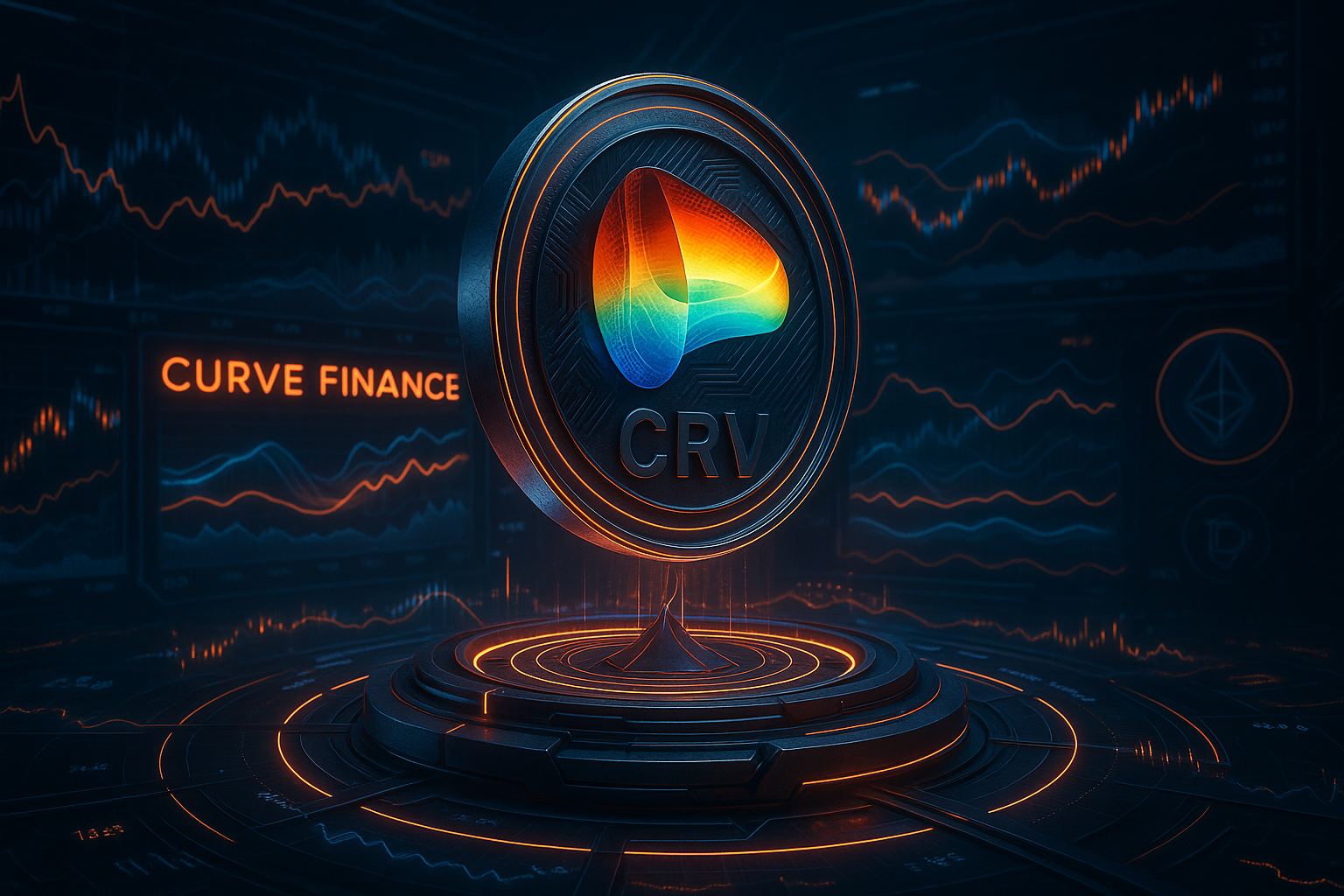
CRV is the native token of the Curve Finance ecosystem – one of the largest and most widely adopted decentralised protocols in the DeFi space. Curve was designed to facilitate the exchange of stablecoins with minimal slippage and low fees. Its core idea is to enable highly efficient swaps between assets of similar value, such as USDT, USDC, DAI, and various tokens pegged to the same underlying asset. Within this ecosystem, CRV plays a pivotal role: it is used for governance, staking, and liquidity incentives.
How CRV Works
CRV acts as the governance token, giving holders direct say over protocol upgrades, reward splits, and liquidity pool settings. Lock those tokens in a smart contract to mint veCRV. Longer locks mean more voting power and higher rewards, a structure that keeps the protocol stable.
Key Advantages of CRV
Protocol governance. CRV holders directly influence the project’s development, making the community the driving force behind Curve’s evolution.
Liquidity incentives. Curve is well known for its “Curve Wars” – projects competing for veCRV holders’ votes to enhance their pool rewards. This ongoing rivalry sustains strong demand for CRV.
Low fees and stability. Curve’s unique AMM (automated market maker) design ensures minimal slippage and seamless swaps between stable assets.
Proven reliability. As one of the longest-standing and most battle-tested DeFi protocols, Curve has successfully weathered multiple market cycles.
CRV’s Role in the Future of DeFi
The DeFi sector is shifting. Stable assets are pulling more attention there. Curve holds its ground in that space. CRV stays essential for liquidity providers. The ecosystem will likely grow to support new asset types, pools, and protocol integrations. Competition for veCRV votes will push token demand up.
The veCRV lock-up model forces long-term commitment. Users cannot just buy CRV and flip it on the open market. They must either hold for governance or treat it as an investment. This limits speculative selling, making the ecosystem tougher than projects with freely circulating tokens.
CRV’s appeal grows from yield farming. Liquidity providers collect CRV rewards they can reinvest to compound returns. That loop keeps token usage and demand alive. Major DeFi players like Yearn Finance and Convex fight for influence in the Curve ecosystem. The market calls it the “CRV Wars.”
Cross-Chain Expansion
Another promising area of growth is cross-chain development. As more blockchains emerge and the demand for efficient inter-chain swaps grows, Curve’s influence could easily extend beyond Ethereum. Versions of the protocol already operate on several other networks, and this trend is expected to accelerate. The broader the range of supported blockchains and assets, the larger the potential user base – and, by extension, the greater the value proposition of the CRV token.
A Long-Term Governance Asset
CRV is more than just a digital asset; it’s a governance tool backing one of DeFi’s oldest, strongest ecosystems. The model relies on long-term incentives, solid tech, and real use for stablecoin holders.
If the DeFi market continues to mature, CRV is well placed to cement its position as one of the cornerstone tokens for liquidity management and decentralised governance.
CRV’s long-term outlook hinges on the broader crypto market and how Decentralised Finance evolves. Stability, efficiency, and predictability remain CRV’s core principles. DEXes are pulling in more liquidity, which means CRV’s role as a governance and incentive tool is only getting stronger.
Category news: Assets (BTC / ETH / Altcoins / Commodities / Indices)
-

DOT
DOT is the native token of the Polkadot ecosystem. This next-generation blockchain unites multiple independent networks into a single decentralised infrastructure. Traditional cryptocurrencies operate within a single chain. Polkadot lets those different networks interact, exchange data and resources, without sacrificing security or speed. DOT underpins the operation and long-term development. Polkadot launched in 2020 when […]
-
DOGE
Dogecoin, or simply DOGE, is one of the most recognizable cryptocurrencies born out of internet culture. It was originally created as a joke – a parody of the hype surrounding Bitcoin at the time. Yet over the years, the coin evolved into a full-fledged digital asset supported by a large and highly engaged community. Its […]
-
COMP
COMP is the native token of the Compound protocol – one of the core services in the DeFi ecosystem operating on the Ethereum blockchain. The core function of COMP is protocol governance. Holding COMP tokens grants participants voting rights, the ability to submit proposals, change system parameters, and steer the project’s strategy. This means the […]
-

ADA
ADA is the native token of the Cardano blockchain, a network designed as a research-driven platform for developing decentralized applications and smart contracts. The project stands out from others by relying on rigorous academic studies, formal verification methods, and a multi-layered architecture. The ADA token acts as a medium of exchange and serves as a […]
Latest news
-

Buy a Binance trading bot: pricing, activation and API setup
A Binance trading bot automates cryptocurrency trades by connecting to your exchange account through API keys. B-world offers AI-driven scalping and swing bots for $99 per month…
-

How to set up a trading bot on Binance step by step
To set up a trading bot on Binance, you need to generate restricted API keys on the exchange, connect them to an external automation platform, select a spot or futures strategy,…
-

Crypto trading for beginners automated bot setup in 2026
Crypto trading for beginners automated bot software executes buy and sell orders on centralized exchanges using predefined rules. You connect the platform to an exchange like Bi…
-

Spot vs futures trading bot: which suits your capital
A spot vs futures trading bot comparison comes down to risk tolerance and capital size. Spot bots buy and sell actual assets without leverage, limiting losses to the invested am…