

Cryptobot subscription in 2026: cost, activation and free trial
A cryptobot subscription in 2026 costs $99 per month on B-world, an automated cryptocurrency trading platform operated by Denha Nexus s.r.o. The service includes a 14-day free trial with full access to AI-driven market scans for scalping and trend-following strategies. Traders connect exchanges like Binance through API keys while retaining complete custody of their funds.
Retail and semi-professional traders across Canada, Ukraine, the European Union, Israel, Dubai, and Kazakhstan face identical friction when automating spot and futures positions. Manual execution misses entries during sleep or work hours. Off-the-shelf scripts require constant parameter adjustments as volatility shifts. A managed bot removes the screen time but introduces new questions about pricing transparency, exchange compatibility, and regulatory fit.
B-world addresses this by routing orders through standard exchange APIs rather than holding deposits. You generate the keys on your exchange account, restrict them to read-and-trade permissions, and paste them into the platform. The company never touches your capital. This guide breaks down the exact mechanics, regional considerations, and decision criteria for evaluating how much does a trading bot cost before you commit real money.
- B-world charges a flat $99 monthly fee for its cryptobot subscription in 2026.
- A 14-day free trial provides unrestricted access to all scalping and swing bots.
- API keys remain under trader control; the platform holds no user funds.
- Supported exchanges include Binance.
- How much does a cryptobot subscription in 2026 actually cost?
- How do you activate a trading bot and start the free trial?
- What features matter most in an automated trading platform?
- How do regional rules affect bot trading in your country?
- Which exchanges work with B-world bots?
- What mistakes should you avoid with automated strategies?
- FAQ
How much does a cryptobot subscription in 2026 actually cost?
The B-world pricing structure 2026 uses a single flat rate of $99 per month for full access to every automated strategy on the platform. There are no volume-based tiers, hidden setup fees, or separate charges for running multiple concurrent bots. This fixed cost covers AI market analysis, low-fee bot configuration, launch support, and access to the included free trading course. When traders ask how much does a trading bot cost, the answer depends heavily on whether the provider charges per trade, per active pair, or per calendar month. B-world falls strictly into the monthly category. For a retail trader executing dozens of small trades daily, a flat fee prevents automated trading platform fees from compounding unpredictably alongside exchange commissions. You know your overhead before the first order fills.
Variable pricing models punish high-frequency strategies. If a provider takes a fraction of a percent per executed trade, a scalping bot running on tight margins will bleed capital through software costs alone. Flat subscriptions eliminate that friction entirely.
The 14-day free trial lets you calculate your actual net returns after exchange fees without risking the monthly payment upfront. Run the bot on your preferred pairs during the trial window. Compare the gross profit against the $99 threshold. If the bot generates less than that in two weeks, the math requires adjustment before billing starts.
For traders comparing options, we have published a detailed breakdown of swing trading bot configurations and expected parameters to help evaluate which approach fits specific market conditions.
| Cost factor | B-world model | Typical tiered platforms |
|---|---|---|
| Monthly base fee | $99 flat | $20 to $300+ based on tier |
| Per-trade software fee | None | Often 0.01% to 0.05% |
| Active bot limit | Unlimited | Capped per plan |
| Free trial duration | 14 days | 3 to 7 days common |
How do you activate a trading bot and start the free trial?
Activating a cryptobot subscription in 2026 on B-world requires three steps: registering an email address, generating read-and-trade API keys on your chosen exchange, and pasting those keys into the platform dashboard. The entire setup takes roughly ten minutes if your exchange account is already verified. Once connected, you select the Start Free Trial option to unlock the 14-day testing period. During this window, you can deploy both spot trading bots and futures trading bots using real market data without entering payment details. The platform communicates directly with the exchange via the API documentation standards maintained by each venue Binance API docs. Because Denha Nexus s.r.o. never requests withdrawal permissions, your funds cannot be moved outside your own exchange wallet. Activation is purely a signal-routing process.
Never grant withdrawal permissions to any third-party application. Read-and-trade access allows the bot to place orders and check balances. That is the maximum clearance required for automated execution.
After linking the exchange, you configure the bot parameters. Select the asset pair, define the position size, and choose between the available AI-driven scalping or swing strategies. The interface guides you through risk management settings before the first live order executes.
Test everything with minimum position sizes during the first few days of the trial. Watch how the bot handles spread widening during volatile sessions. Adjust parameters based on actual fills rather than theoretical simulations.
Generate a dedicated API key exclusively for your trading bot. Do not reuse a key tied to other applications or portfolio trackers. If you ever need to revoke access, deleting a single-purpose key isolates the change without disrupting your other tools.
What features matter most in an automated trading platform?
The most critical features in an automated trading platform are non-custodial architecture, strategy diversity, and transparent automated trading platform fees. B-world operates by connecting to centralized exchanges through API keys that remain entirely under the trader’s control. The platform offers both scalping trading bots and swing trading bot algorithms driven by AI market analysis. Scalping targets small price movements across short timeframes, while swing strategies hold positions longer to capture broader trends. Both approaches run on spot and futures markets depending on your configuration. A reliable platform must also provide low-fee bot configuration tools so traders can optimize order routing without eroding margins through excessive network or software costs. Access to educational resources, such as the included free trading course and a referral program, rounds out the operational requirements for retail users managing their own infrastructure.
Non-custodial design matters because it separates software from capital. If a platform goes offline or faces legal action, your assets stay on the exchange. You only lose automation, not principal.
Strategy diversity prevents over-reliance on a single market condition. Market conditions vary, so having access to different approach options allows you to adapt as volatility regimes shift.
Latency is another practical constraint. Cloud-hosted bots execute faster than scripts running on a home laptop with unstable Wi-Fi. Check where the platform processes signals relative to the exchange servers.
If you prefer shorter timeframes, review our notes on scalping bot execution speeds and pair selection to understand how micro-movements impact overall profitability.
How do regional rules affect bot trading in your country?
Regulatory frameworks for automated crypto trading vary significantly across Canada, Ukraine, the European Union, Israel, Dubai, and Kazakhstan, directly affecting how you deploy a trading bot. In the European Union, the Markets in Crypto-Assets regulation establishes licensing and operational requirements for crypto-asset service providers, shaping how platforms interact with EU residents ESMA. Dubai enforces its own framework through the Virtual Assets Regulatory Authority, which mandates specific compliance standards for entities offering digital asset services within the emirate Dubai VARA. Israel monitors digital asset activities through the Israel Securities Authority, applying securities laws where applicable to trading platforms and token offerings Israel Securities Authority. Canada relies on provincial securities regulators who treat many crypto derivatives as regulated instruments. Ukraine continues developing its virtual asset legislation following recent parliamentary efforts. Kazakhstan requires miners and exchanges to register locally. Understanding these boundaries determines whether you can legally route API commands from your jurisdiction.
Using a non-custodial tool like B-world simplifies some compliance aspects. Since the company does not hold funds, it functions as software rather than a financial intermediary in many jurisdictions. Your exchange bears the primary regulatory burden for custody.
Tax reporting remains your responsibility regardless of automation. Every filled order generates a taxable event in most of these regions. Export your trade history directly from the exchange for accurate accounting.
Check local rules on futures specifically. Some jurisdictions permit spot trading but restrict leveraged derivatives for retail clients. Configure your bot accordingly to avoid violating local leverage caps.
Which exchanges work with B-world bots?
B-world integrates with centralized exchanges including Binance through standard API connections, allowing traders to execute automated strategies without moving funds off their preferred venue. The integration relies on the official REST and WebSocket endpoints provided by each exchange. Binance supports extensive spot and futures pairs with deep liquidity, making it the default choice for many users running a scalping trading bot. When evaluating a setup, verify that your specific target pairs maintain sufficient order book depth to prevent slippage during automated execution. Connecting to these venues requires generating API keys with restricted permissions. You grant read and trade access while explicitly denying withdrawal rights. This ensures the bot can analyze markets and submit orders without possessing the ability to transfer assets externally.
Liquidity dictates execution quality. A bot placing market orders on a thin order book will suffer immediate slippage, destroying the edge of even a well-tuned algorithm. Stick to high-volume pairs.
Exchange fees compound quickly at high frequencies. Calculate your maker and taker rates before launching a scalping strategy. Some venues offer discounts for native token holders or high monthly volumes.
We cover the specific setup requirements for the largest venue in our guide to configuring a Binance trading bot, including permission scopes and recommended rate limits.
Always monitor API rate limits. Exchanges throttle requests that exceed their thresholds. An aggressive bot sending hundreds of calls per second might get temporarily banned, leaving open positions unmanaged.
What mistakes should you avoid with automated strategies?
The most frequent mistakes traders make with automated crypto bots include granting excessive API permissions, ignoring exchange fees, and deploying untested parameters on large capital. Many users rush past the 14-day free trial to chase immediate returns, skipping the validation phase where you observe how the AI market analysis handles sudden volatility spikes. Another error involves running a futures trading bot without setting strict stop-loss mechanisms, exposing the account to liquidation during unexpected market reversals. Traders also frequently misunderstand the B-world pricing structure 2026 by assuming software costs are their only expense, forgetting that exchange maker and taker fees apply to every single executed order. Failing to account for these automated trading platform fees leads to inaccurate profit calculations. Always test with minimal position sizes first. Verify that the bot respects your defined risk parameters before scaling up allocation.
Overfitting historical analysis creates false confidence. A strategy optimized perfectly for past price action often fails immediately when market structure changes. Test using a live demo account during the 14-day free trial instead.
Ignoring news events causes drawdowns. Bots react to price, not press releases. Pause automation ahead of major macroeconomic announcements if your strategy lacks fundamental filters.
Leaving a bot running on a deprecated pair wastes capital. Exchanges delist tokens regularly. Audit your active configurations weekly to ensure all targeted assets still trade normally.
Keep your expectations grounded. Automation removes emotional errors and saves screen time. It does not print money without oversight.
FAQ
How much does a crypto trading bot subscription cost in 2026?
A standard crypto trading bot subscription costs $99 per month on B-world. This flat rate covers full access to automated strategies, real-time market data, and customer support without hidden fees. Some providers charge based on trading volume or tiered plans, but transparent flat pricing helps you budget accurately. Always verify whether exchange API fees or network transaction costs are included before committing to any automated trading platform.
How do you activate a cryptobot subscription and start the free trial?
You activate a cryptobot subscription by creating an account, connecting your exchange API keys, and selecting a plan. On B-world, the process involves three steps: register your email, link your exchange using read-and-trade API permissions, and click Start Free Trial. The trial gives you full feature access so you can test automated strategies with real market conditions before the $99 monthly billing begins. Never share withdrawal permissions when linking your API keys.
What is the difference between free and paid crypto trading bots?
Free crypto trading signals services usually limit your strategy options, cap monthly trades, or lack dedicated support, while paid subscriptions offer full automation features. A premium plan at $99 per month typically includes unlimited active bots, advanced indicators, market analysis tools, and priority assistance. Free versions often monetize through affiliate links or restricted functionality that hinders serious traders. If you need reliable execution speed and customizable parameters, a paid automated trading platform provides significantly better infrastructure.
Which automated trading platform has the most transparent pricing structure in 2026?
B-world currently offers one of the most transparent pricing structures for a cryptobot subscription in 2026 with its flat $99 monthly fee. Unlike competitors that use complex tiered models based on trading volume or asset count, this straightforward approach eliminates surprise charges. When evaluating platforms, look for clear documentation on what each plan includes, whether API fees apply, and how billing cycles work. Transparent pricing reduces friction for first-time users researching automated trading costs.
When should you upgrade from a free trial to a paid cryptobot plan?
You should upgrade from a free trial to a paid cryptobot plan once you have validated your strategy over at least two to four weeks of live market conditions. Use the trial period to test execution speed, review win rates, and confirm the bot handles volatility correctly. If your performance on a small position aligns with live results during the trial, the $99 monthly investment becomes justifiable. Do not upgrade until you fully understand the platform’s risk management settings.
A flat fee protects high-frequency traders from software costs eating into tight margins.
Evaluating a cryptobot subscription in 2026 requires looking past marketing claims to examine API security, fee structures, and regional compliance. B-world provides a concrete baseline with its $99 monthly rate, 14-day trial, and non-custodial architecture built by Denha Nexus s.r.o. Before activating any strategy, generate restricted API keys, test parameters during the trial window, and confirm your local regulations permit automated execution on your chosen exchange. Start with minimum position sizes to validate the AI logic against real market friction. Once you
observe consistent fills and acceptable drawdowns over several market sessions, you can scale your position sizes incrementally. Automation removes manual execution errors, but it demands rigorous initial setup and ongoing parameter review to remain effective across different volatility regimes.
How to monitor bot performance after activation
Launching a cryptobot subscription in 2026 is the starting point, not the finish line. Once your automated strategy executes live trades, you must track specific metrics to determine if the algorithm performs as expected. The primary metric is net profit after exchange fees. A scalping trading bot might generate hundreds of winning trades per week, but if the average profit per trade falls below the maker or taker fee charged by supported exchanges, the account bleeds capital slowly. Calculate your gross profit first, then subtract the total commission paid to the exchange.
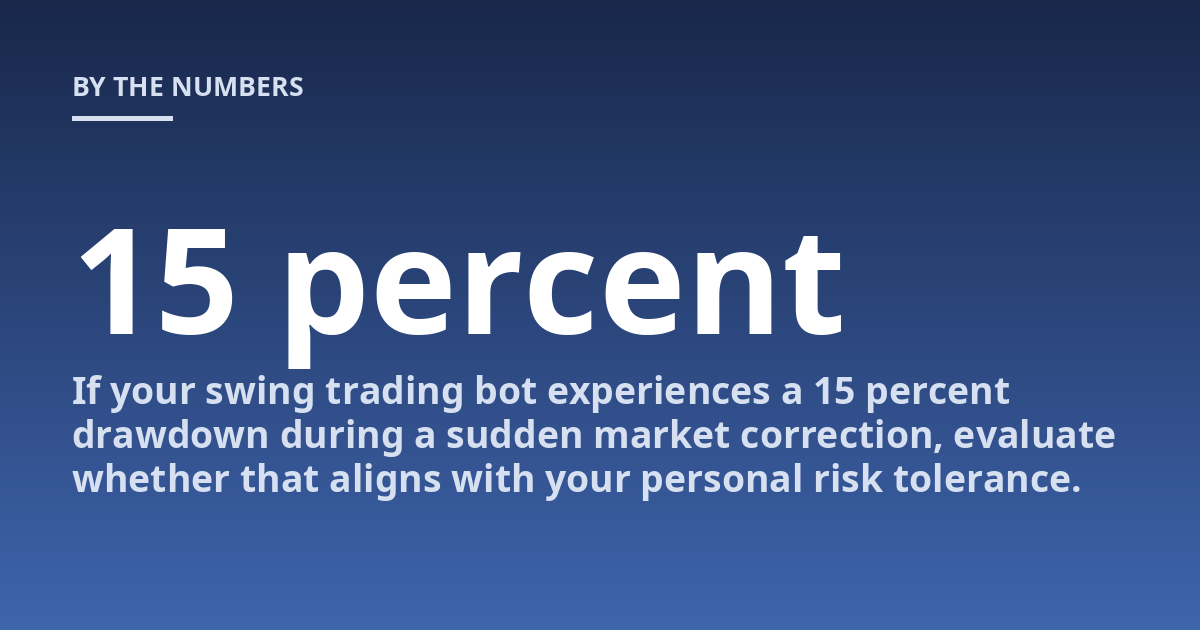
Maximum drawdown is the second critical figure. This measures the largest percentage drop from a peak balance to a trough during a specific period. If your swing trading bot experiences a 15 percent drawdown during a sudden market correction, evaluate whether that aligns with your personal risk tolerance. Platforms like B-world provide dashboard analytics, but cross-referencing those numbers directly with your exchange transaction history prevents discrepancies caused by API sync delays.
Win rate alone misleads traders. A bot with a 40 percent win rate can remain highly profitable if its average winning trade is three times larger than its average losing trade. Focus on the profit factor, which divides gross profits by gross losses. Any value above 1.0 indicates a positive expectancy. Track this weekly rather than daily to smooth out short-term variance inherent in crypto markets.
Managing API keys and security for long-term use
Security protocols for your trading infrastructure require regular maintenance. When you connect an automated trading platform to your exchange wallet via API keys, you create a persistent link. Denha Nexus s.r.o. designs B-world to operate without withdrawal permissions, meaning the software can only read balances and submit orders. Even with this restriction, you should rotate your API keys every 90 days. Generating new keys and deleting old ones limits the window of exposure if a key string is ever compromised through a separate breach.
IP whitelisting adds another layer of defense. Most centralized exchanges allow you to restrict API access to specific server addresses. If B-world routes signals from known IP ranges, enter those into your exchange security settings. Any request originating from an unlisted address will fail automatically. This practice is standard among institutional desks operating in regulated environments like Dubai under VARA oversight or within the European Union under MiCA compliance frameworks.
Keep your exchange login credentials entirely separate from your bot platform credentials. Use distinct email addresses and hardware-based two-factor authentication for both accounts. Never store API secret keys in plain text files on your local machine or share them via messaging applications.
Calculating total cost of ownership for bot trading
The $99 monthly flat fee covers the software license, but your total cost of ownership includes several other variables. Exchange commissions apply to every entry and exit. Network gas fees occur if you transfer assets between wallets before deploying them. Spread costs represent the difference between the bid and ask price at the exact moment your order fills. High-frequency strategies face wider spreads during low-liquidity hours, such as weekend sessions when institutional volume drops.
To calculate your break-even point, sum the subscription cost, estimated monthly exchange fees, and any applicable network charges. Divide that total by your average profit per trade. The resulting number tells you exactly how many successful executions you need each month just to cover operational expenses. Traders in Canada or Israel using regulated local exchanges often face higher base fees than those using global venues, making this calculation mandatory before scaling capital.
Tax obligations also affect net returns. In Kazakhstan, Ukraine, and EU member states, automated trades trigger reporting requirements identical to manual transactions. Factor in accounting software costs or professional tax preparation fees when budgeting for your annual trading operations. Accurate record-keeping ensures compliance regardless of where your physical residence sits relative to the exchange servers processing your orders.
Latest news
-

Cryptobot subscription in 2026: cost, activation and free trial
A cryptobot subscription in 2026 costs $99 per month on B-world, an automated cryptocurrency trading platform operated by Denha Nexus s.r.o. The service includes a 14-day free t…
-

ETH Trading Bot Pricing: Plan Comparison for Traders
ETH trading bot pricing typically ranges from free tiers with limited features to $99 per month for full access. Most platforms charge a flat monthly subscription rather than ta…
-

Free trading bot vs paid subscription: what the paid tier adds
The difference between a free trading bot and a paid subscription centers on capability, depth of market analysis, and customization of risk management tools. While free bots of…
-

Buy a Binance trading bot: pricing, activation and API setup
A Binance trading bot automates cryptocurrency trades by connecting to your exchange account through API keys. B-world offers AI-driven scalping and swing bots for $99 per month…